
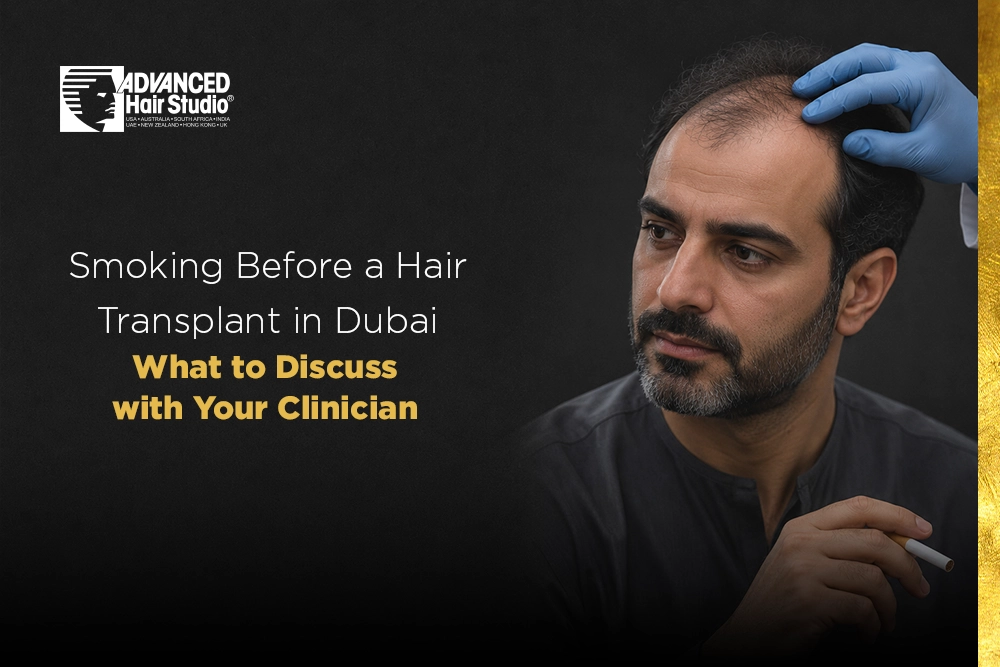
Smoking before a hair transplant is more than a lifestyle detail. If you are considering hair restoration, sharing your smoking habits with your clinician can help inform your assessment and preparation. Smoking before hair transplant procedures may affect circulation and wound healing, but individual risks vary. Understanding what to disclose and which questions to ask can help you prepare for an informed consultation.
Why Smoking Belongs in Your Medical History
Smoking can influence the body’s response to surgery. Nicotine can narrow blood vessels, while carbon monoxide in cigarette smoke reduces the blood’s oxygen carrying capacity. These effects may influence the healing process:
- Blood circulation: Reduced blood flow may affect oxygen delivery to healing tissues.
- Wound healing: Smoking is associated with delayed healing and a higher risk of certain surgical complications.
- Graft considerations: The condition of the scalp and its blood supply are relevant to transplant planning.
Smoking before a hair transplant does not automatically determine whether you are suitable, but it is an important factor in clinical assessment.
What Should You Disclose Before a Transplant?
A complete smoking disclosure before transplant consultation helps the clinical team understand your exposure and relevant health factors. Be prepared to discuss:
- Whether you smoke cigarettes, shisha, or use other tobacco products.
- How frequently you smoke and for how long.
- Whether you use nicotine products, including vaping devices or replacement products.
- Any previous attempts to stop or reduce smoking.
- Relevant medical conditions and medications.
Nicotine before hair restoration may be relevant even when it comes from products other than cigarettes. Do not assume that vaping or nicotine replacement is medically irrelevant. Share these details with your clinician.
How Clinicians Assess Individual Risk
A preoperative lifestyle review considers more than smoking alone. Your clinician may review your health, scalp condition, medications, and other factors that could influence surgical planning
- Your general health and relevant medical history.
- The condition of the donor and recipient areas.
- Medications or supplements that may affect care.
- Other transplant healing risk factors, such as certain health conditions.
This information helps the clinical team determine whether additional review, specific preparation, or a change in timing may be appropriate. Smoking before a hair transplant should be considered alongside your overall health rather than in isolation.
Why Do Instructions Vary?
There is no universal smoking cessation timeline that applies to every hair transplant patient. Recommendations may differ according to the procedure, health history, smoking exposure, and the clinician’s assessment.
Smoking before a hair transplant should therefore be discussed directly with the treating team:
- Ask whether stopping smoking is advised before your procedure.
- Confirm when to stop, if a specific timeline is recommended.
- Ask whether the instructions also apply to vaping or other nicotine products.
- Follow the guidance provided for your individual case rather than relying on a general timeline found online.
Questions to Ask Before Scheduling
Before confirming your procedure, consider asking the clinical team:
- How could my smoking habits affect my individual assessment?
- When should I stop smoking before surgery, if advised?
- What instructions apply after the procedure?
- Should I discuss vaping or nicotine replacement with the clinical team?
- Could my health history affect the timing of treatment?
Why Choose Advanced Hair Studio UAE?
Planning a hair transplant involves more than assessing hair loss. For patients who smoke, understanding how tobacco or nicotine use may affect surgical preparation and healing is also an important part of the consultation.(Watch this)
At Advanced Hair Studio UAE, the hair restoration consultation provides an opportunity to discuss your hair and scalp condition, medical history, and lifestyle factors before considering a suitable approach.
- Discuss Your Smoking History Openly: Sharing details about cigarettes, shisha, vaping, or other nicotine products helps the clinical team understand relevant factors before treatment.
- Review Your Hair Transplant Suitability: Your donor area, recipient area, and individual health factors can be considered together when discussing surgical options.
- Receive Individual Guidance: Rather than relying on a general smoking cessation timeline, you can discuss the preparation instructions relevant to your condition and proposed procedure.
If you are considering a hair transplant and smoke, book a consultation with Advanced Hair Studio UAE to discuss your concerns and understand the next steps for your individual case.
Frequently Asked Questions
Can I have a hair transplant if I smoke?
Smoking does not automatically determine whether someone is suitable for a hair transplant. However, it may affect circulation and wound healing. Your clinician should review your smoking habits, health history, and scalp condition before making a recommendation.
How long should I stop smoking before a hair transplant?
There is no single timeline that applies to every patient. The recommended timing may depend on your health, smoking exposure, and the planned procedure. Ask your clinical team for instructions specific to your case.
Does vaping also matter before hair restoration?
Yes. Vaping products may contain nicotine, which can affect blood vessels. Disclose vaping and any nicotine use to your clinician, including nicotine replacement products, so they can provide appropriate guidance.
Should I avoid smoking after a hair transplant too?
Postoperative instructions may include avoiding smoking during recovery because smoking can affect healing. The duration and specific recommendations should come from your treating clinical team, based on your procedure and individual circumstances.
Conclusion
Smoking before a hair transplant is an important topic to discuss before scheduling treatment. Your smoking history, health, and scalp condition can all inform the clinical assessment.
📞 +971 55 352 6174
📞 +971 4 345 1233
📍 Villa 2, Al Wasl Road, Umm Suqeim 3, Dubai