
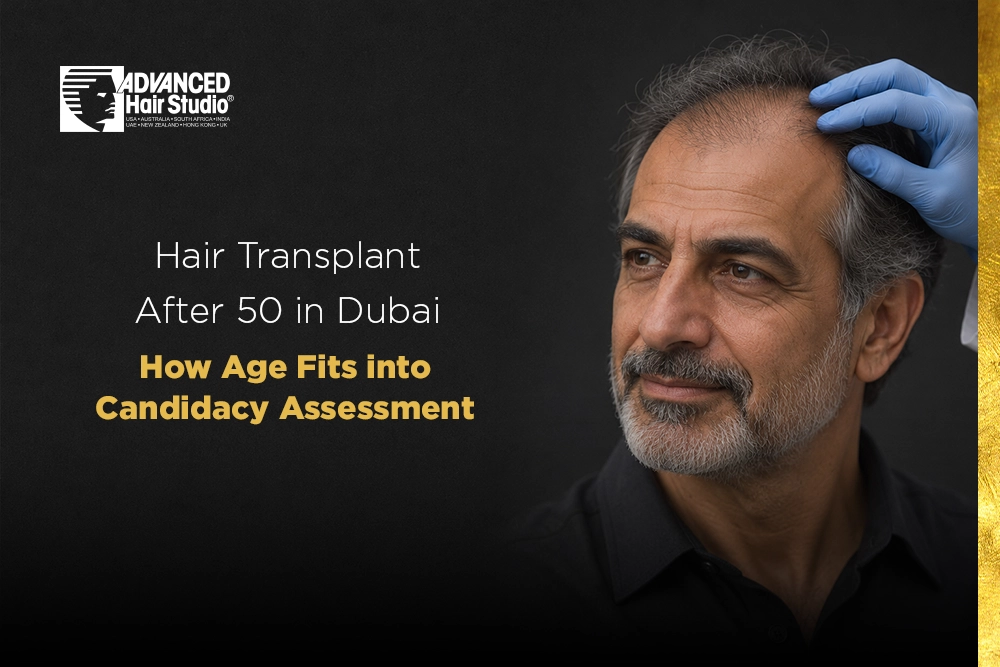
Considering a hair transplant later in life? A hair transplant over 50 may be an option for some people, but age alone cannot determine whether surgery is appropriate. A careful assessment helps clarify whether your hair loss pattern, donor supply, health, and goals support a safe and realistic plan.
Does Age Alone Decide Suitability?
Age is one part of candidacy, not a stand-alone rule. Hair restoration for mature patients depends on several factors:
- The cause and progression of hair loss.
- The condition of the scalp.
- Overall health and medical history.
- Personal goals and expectations.
A hair transplant over 50 is considered only after these factors are reviewed. The procedure redistributes existing follicles; it does not stop ongoing hair loss in untreated areas.
Donor Supply and Current Hair Loss Pattern
The donor area, usually at the back and sides of the scalp, provides the follicles used for transplantation. Its characteristics help guide the amount and distribution of coverage that may be possible.
Assessment may consider:
- The density and quality of donor hair.
- Hair calibre and the stability of the donor area.
- The extent and pattern of thinning in recipient areas.
- Whether hair loss appears stable or is continuing.
For transplant planning after fifty, the aim is not simply to move the largest number of grafts. A hair transplant over 50 should be planned around the individual’s available donor resources and long-term appearance.
Health and Medication History
A medical history helps identify factors that may affect procedural planning or healing. Patients should share relevant conditions and a complete list of medicines, including prescriptions, over-the-counter products, and supplements.
The clinician may review:
- Cardiovascular conditions, diabetes, blood pressure, or bleeding concerns.
- Medicines that may affect clotting or other aspects of care.
- Scalp conditions or previous procedures.
- Whether additional medical review is appropriate.
Do not stop or change medication without advice from the prescribing clinician. A hair transplant over 50 requires an individualized medical assessment, not assumptions based on age.
Expectations and Long-Term Planning
Hair restoration should suit the person’s current features and potential future hair loss. Expectations for later-life hair restoration may focus on improving specific areas rather than recreating youthful density across the scalp.
It is useful to discuss:
- Which areas matter most to you.
- The coverage that may be realistic with available donor hair.
- The possibility that native hair may continue to thin.
- Whether future treatment or monitoring may be considered.
A hair transplant over 50 cannot guarantee a particular density or eliminate the need for ongoing care.
When Alternatives May Be Discussed
A hair transplant may not be the most suitable option for every person over 50. When the assessment identifies factors that could affect surgical planning, other approaches may be considered.
These may include:
- Limited donor supply: Non surgical options may be discussed when available follicles cannot provide the desired coverage.
- Ongoing or diffuse hair loss: Medical management may be considered, depending on the cause and clinical assessment.
- Scalp or health concerns: Further evaluation may be needed before surgery is considered.
The appropriate approach depends on the individual diagnosis, health, and goals. A hair transplant over 50 should only be recommended when the potential benefits, limitations, and risks have been carefully considered.
Why Choose Advanced Hair Studio UAE?
For people over 50, the key question is not simply whether they can undergo a hair transplant, but how their existing hair and donor supply can support a suitable restoration plan.(Watch this)
At Advanced Hair Studio UAE, the assessment considers the characteristics that matter specifically to mature patients:
- Planning around available donor hair: Understanding donor density and quality helps assess how much coverage may be possible without overlooking the importance of preserving donor resources.
- Considering the current hair loss pattern: The extent and progression of thinning can influence which areas may be addressed and how restoration is planned.
- Setting realistic expectations: Rather than focusing only on age or graft numbers, the consultation considers the person’s hair characteristics, goals, and potential future hair loss.
This approach helps patients understand whether surgery may be appropriate for their individual condition and what other options may be worth discussing.
Frequently Asked Questions
Is 50 too old to have a hair transplant?
Age 50 is not automatically a barrier to hair transplantation. Suitability depends on donor hair quality, the pattern of hair loss, general health, and individual expectations.
Does hair loss need to be stable before a transplant?
The pattern and progression of hair loss are important parts of assessment. Ongoing hair loss may affect long term planning, so the clinician should review whether and how it may influence the proposed approach.
Can a hair transplant provide full hair coverage after 50?
The amount of coverage depends on available donor follicles, the extent of hair loss, and individual hair characteristics. A specific density or outcome cannot be guaranteed.
What should I discuss during a hair transplant consultation after 50?
Discuss your medical history, medications, hair loss progression, donor area, goals, and concerns about future thinning. These details help the clinician assess suitability and explain possible options.
Conclusion
Age is not the only factor in hair transplant candidacy. Donor supply, health, hair loss progression, and realistic goals all play an important role. A hair transplant over 50 may be an option for suitable candidates following an individual assessment.
Book a consultation with Advanced Hair Studio UAE to discuss your hair restoration options and understand whether a surgical approach may be suitable for you.
📞 +971 55 352 6174
📞 +971 4 345 1233
📍 Villa 2, Al Wasl Road, Umm Suqeim 3, Dubai